Spine Deformity Correction in Purnea | Advanced Orthopaedic & Spine Center
Advanced Hospital Specialty Treatment
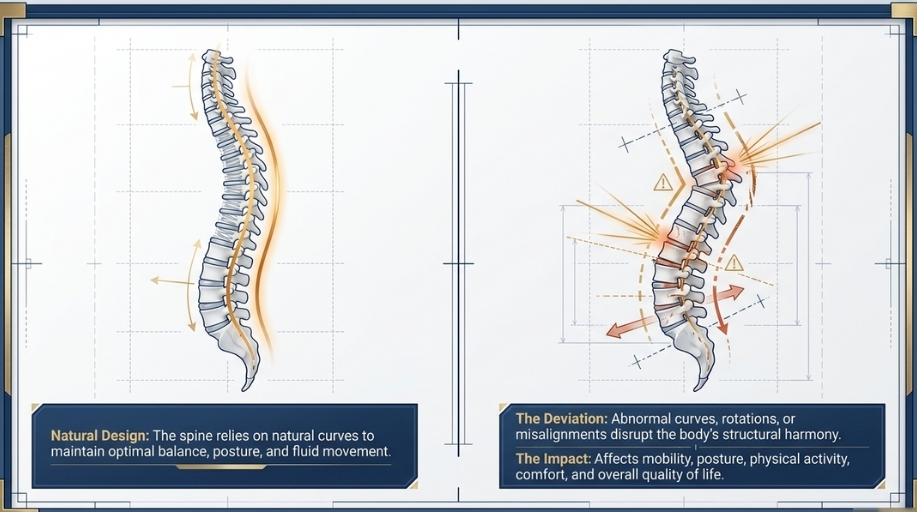
A healthy spine has natural curves that help maintain balance, posture, and movement. When the spine develops an abnormal curvature or loses its normal alignment, it may result in a spinal deformity. Depending on its type and severity, a spinal deformity can affect posture, mobility, comfort, physical activity, and overall quality of life.
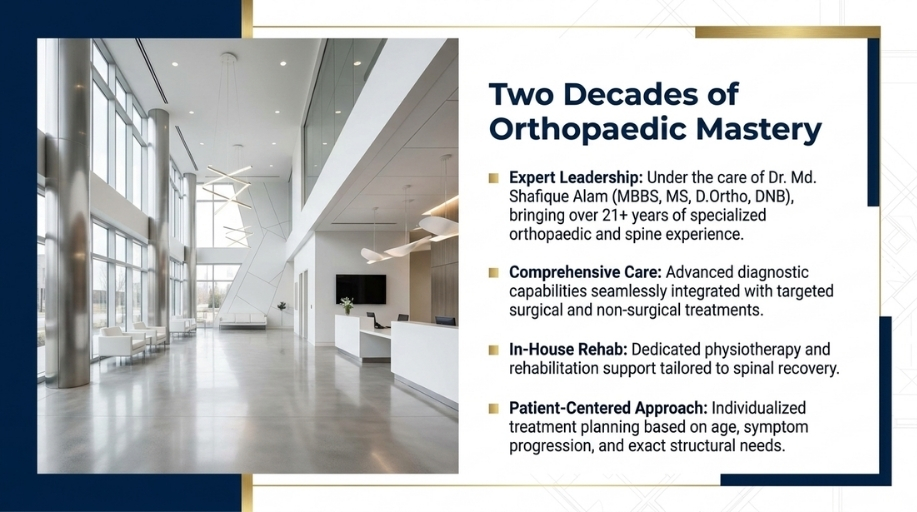
At Advanced Orthopaedic & Spine Center, Purnea, we provide comprehensive evaluation and treatment for different types of spinal deformities. Under the expert care of Dr. Md. Shafique Alam (MBBS, MS, D.Ortho, DNB), with over 21 years of experience, patients receive individualized assessment and treatment based on the type, severity, age, symptoms, and progression of the deformity.
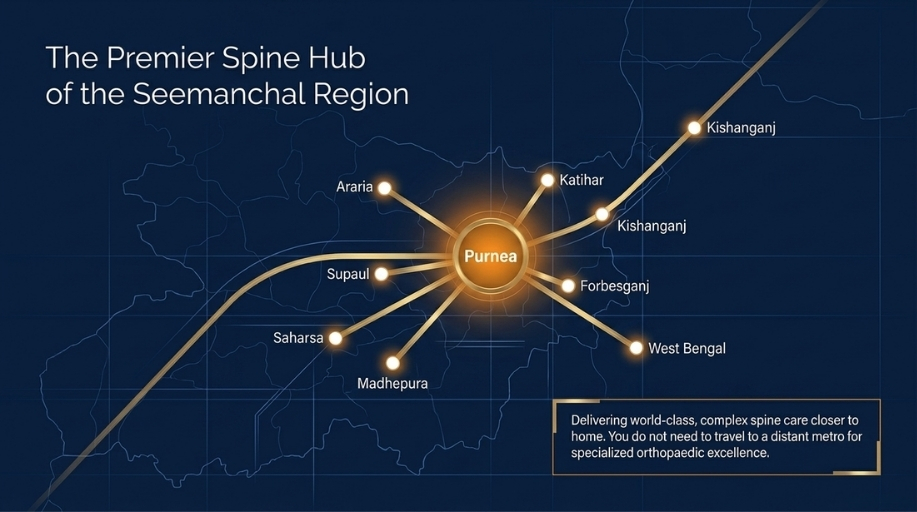
We provide specialized spine care to patients from Purnea and across the Seemanchal region, including Katihar, Kishanganj, Araria, Supaul, Saharsa, Madhepura, Forbesganj, and nearby areas.
What is a Spinal Deformity?
A spinal deformity occurs when the spine develops an abnormal curve, rotation, or alignment. Some deformities develop during childhood or adolescence, while others may occur due to ageing, injury, degenerative changes, osteoporosis, or other spinal conditions.
Not every spinal deformity requires surgery. Early evaluation can help determine whether observation, physiotherapy, bracing, lifestyle modification, or surgical correction may be appropriate.
Types of Spine Deformities We Manage
Depending on the patient's condition, our spine care services include evaluation and management of:
- Scoliosis
- Kyphosis
- Abnormal Spinal Curvature
- Degenerative Spinal Deformity
- Post-Traumatic Spinal Deformity
- Adult Spinal Deformity
- Spinal Alignment Problems
- Deformity Associated with Vertebral Fractures
- Progressive Spinal Curvature
- Complex Spinal Deformities
Common Signs and Symptoms
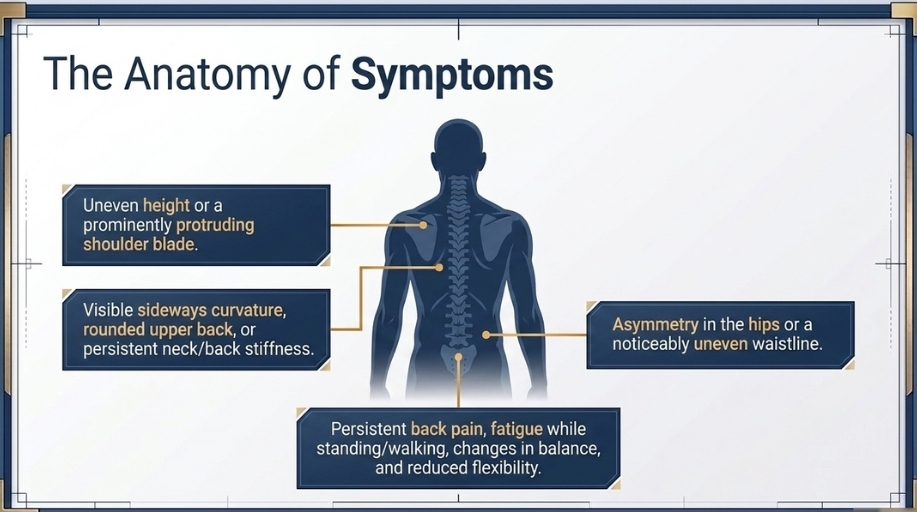
Spinal deformities may not always cause pain, particularly in the early stages. Common signs and symptoms can include:
- Uneven shoulders
- Uneven waist or hips
- Visible curvature of the spine
- Rounded upper back
- Persistent back pain
- Neck or back stiffness
- Difficulty maintaining proper posture
- Reduced flexibility
- Fatigue while standing or walking
- Difficulty performing physical activities
- Changes in balance or movement
A visible change in spinal alignment or persistent symptoms should be evaluated by an experienced orthopaedic and spine specialist.
Causes of Spinal Deformity
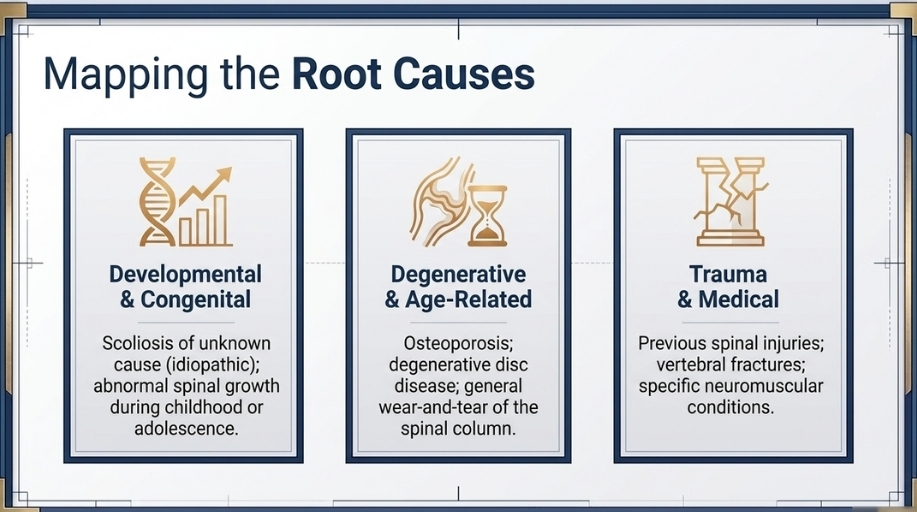
Spinal deformities may develop due to different factors, including:
- Developmental or congenital conditions
- Scoliosis of unknown cause
- Age-related degeneration
- Osteoporosis
- Vertebral fractures
- Previous spinal injuries
- Degenerative disc disease
- Abnormal spinal growth
- Certain neuromuscular conditions
In some patients, the exact cause may not be immediately identifiable. A detailed evaluation helps determine the nature and severity of the deformity.
Our Approach to Spine Deformity Correction
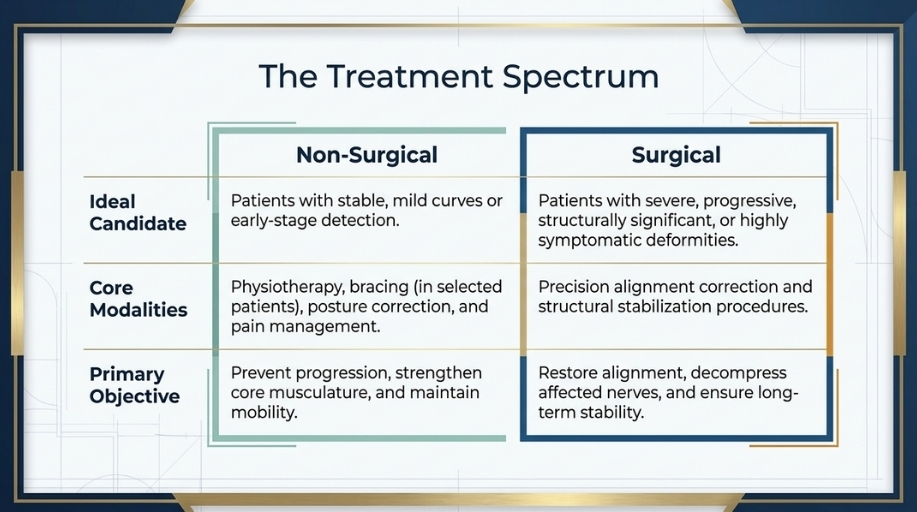
The treatment of spinal deformity depends on several factors, including the type of deformity, degree of curvature, age, symptoms, progression, and overall health.
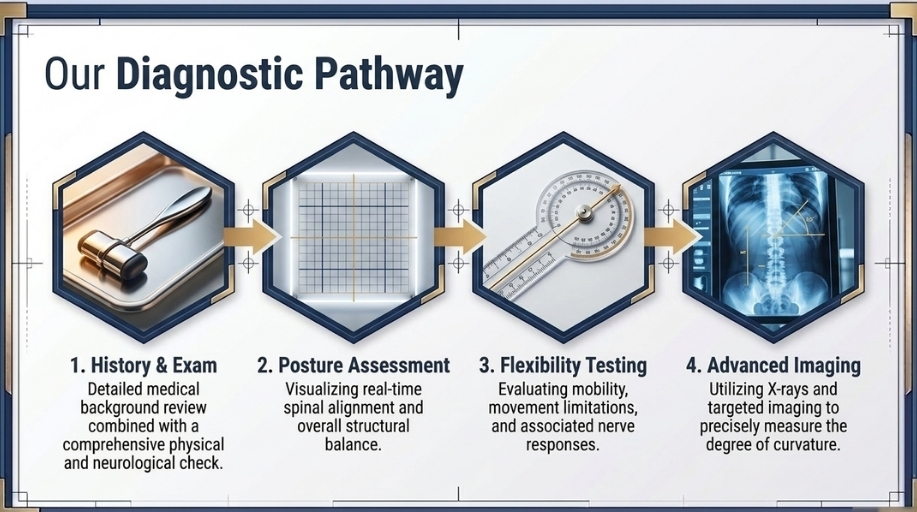
Our evaluation may include:
- Detailed medical history
- Physical and neurological examination
- Posture and spinal alignment assessment
- X-rays and other imaging when required
- Assessment of spinal flexibility and movement
- Evaluation of associated nerve symptoms
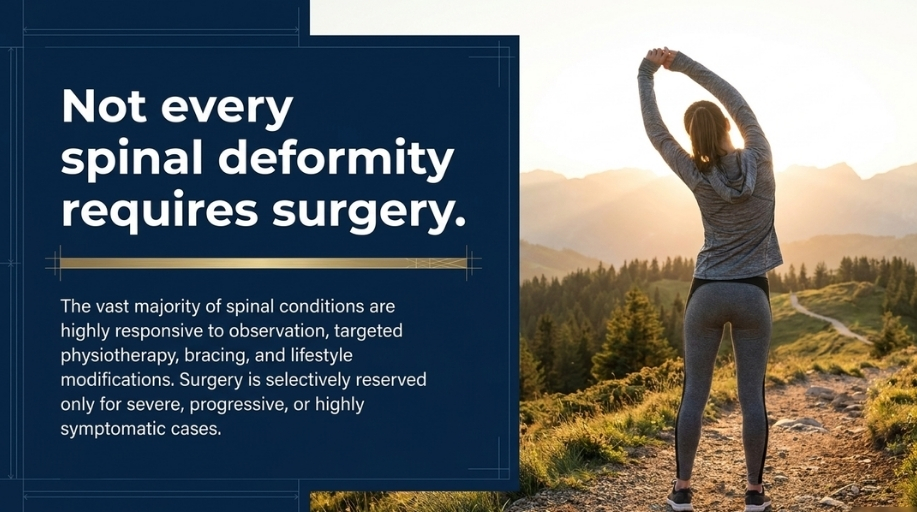
Non-Surgical Management
Depending on the condition, non-surgical treatment may include:
- Physiotherapy
- Posture correction
- Strengthening exercises
- Activity modification
- Pain management
- Bracing in selected patients
- Regular clinical and imaging follow-up
Surgical Correction
Surgery may be considered for selected patients with severe, progressive, symptomatic, or structurally significant deformities. The exact procedure depends on the type and severity of the spinal deformity.
The objective of surgical correction is to improve spinal alignment and stability while addressing associated pain, neurological problems, or functional limitations where appropriate.
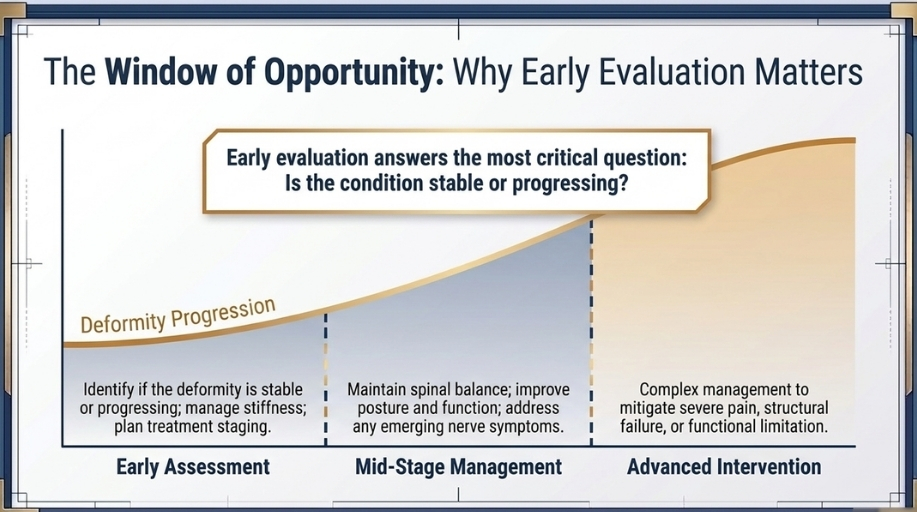
Why Early Evaluation Matters
Early assessment of a spinal deformity can help determine whether the condition is stable or progressing. Appropriate monitoring and treatment may help:
- Identify progressive deformity
- Manage pain and stiffness
- Improve posture and function
- Maintain spinal balance
- Address associated nerve symptoms
- Plan treatment at an appropriate stage
- Support long-term spinal health
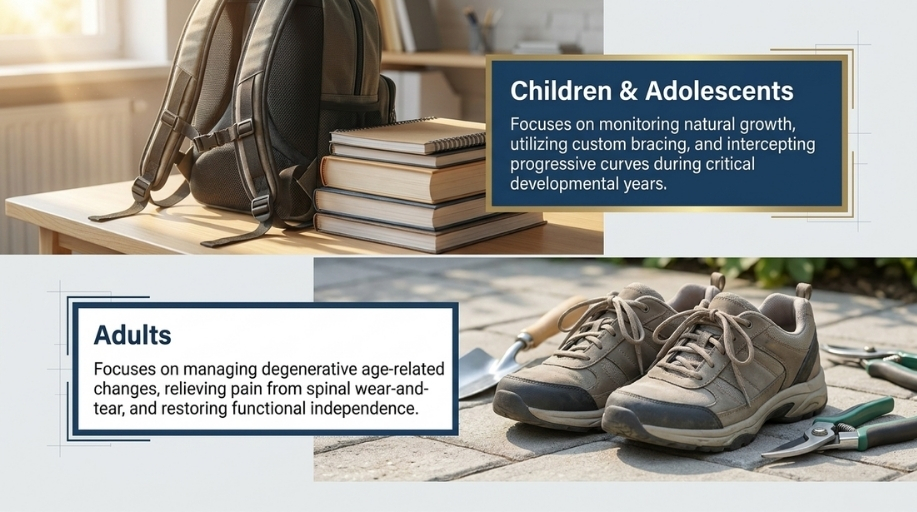
Children and adolescents with noticeable changes in spinal alignment should receive timely evaluation, particularly when the curvature appears to be increasing.
Spine Deformity Rehabilitation
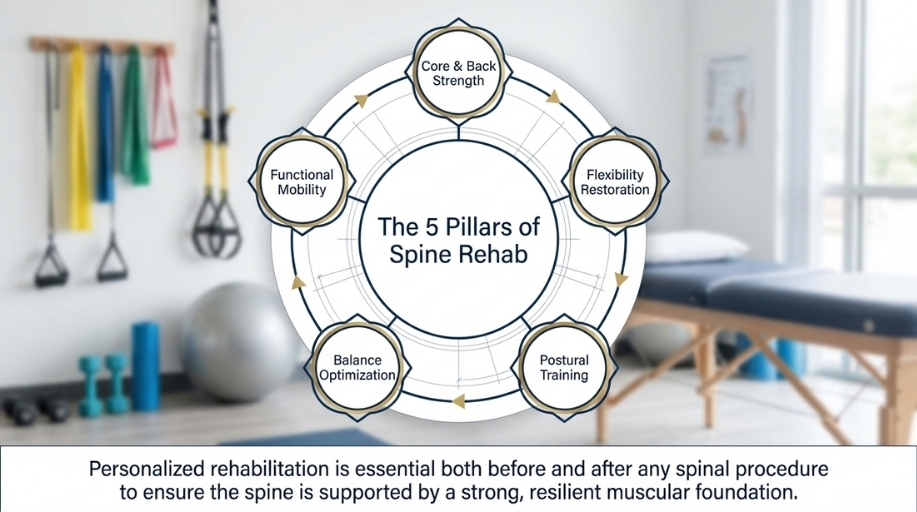
Rehabilitation can be an important part of treatment before and after certain spine procedures. A personalized physiotherapy program may help improve:
- Core and back muscle strength
- Flexibility
- Posture
- Balance
- Mobility
- Functional movement
The rehabilitation plan is tailored to the patient's condition and stage of recovery.
Why Choose Advanced Orthopaedic & Spine Center?
- 21+ Years of Orthopaedic Experience
- Comprehensive Spine Deformity Evaluation
- Personalized Treatment Planning
- Non-Surgical & Surgical Treatment Options
- Advanced Spine Care
- Physiotherapy & Rehabilitation Support
- Patient-Centered Approach
- Conveniently Located in Purnea
- Serving Patients Across Seemanchal
Frequently Asked Questions (FAQs)
1. What is spinal deformity?
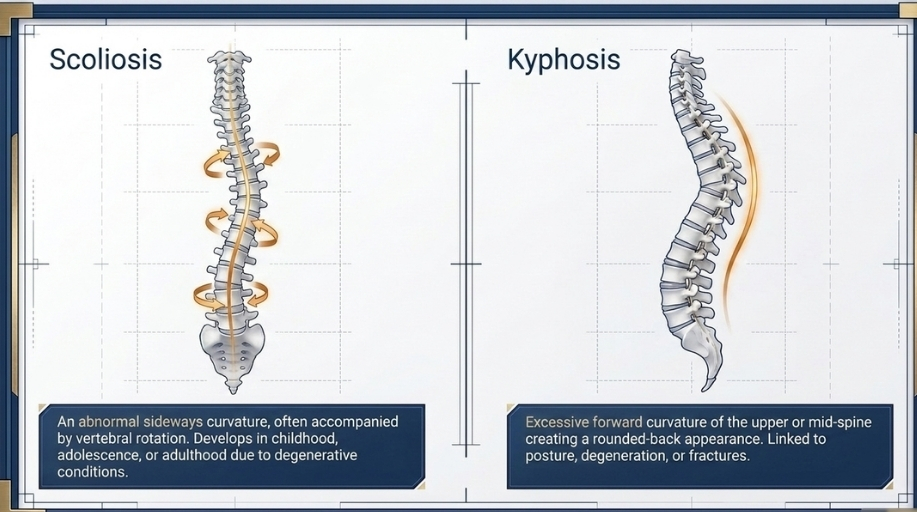
Spinal deformity is an abnormal curvature, alignment, or shape of the spine. Common examples include scoliosis, which involves sideways curvature, and kyphosis, which involves excessive forward curvature of the upper spine.
2. Does every spinal deformity require surgery?
No. Many spinal deformities can be monitored or managed with non-surgical treatment. Surgery is considered only for selected patients based on factors such as severity, progression, symptoms, and functional impact.
3. What is scoliosis?
Scoliosis is an abnormal sideways curvature of the spine, often accompanied by rotation of the vertebrae. It can develop during childhood or adolescence but can also occur in adults due to degenerative or other spinal conditions.
4. What is kyphosis?
Kyphosis refers to an excessive forward curvature of the upper or mid-spine, which may create a rounded-back appearance. It can be related to posture, spinal degeneration, fractures, or other conditions.
5. Can spinal deformity cause back pain?
Yes. Some spinal deformities can cause back pain, stiffness, muscle fatigue, or difficulty with physical activities. However, some people with spinal curvature may have few or no symptoms.
6. Can children and teenagers be treated for spinal deformities?
Yes. Children and adolescents with suspected spinal deformities should be evaluated early. Monitoring and appropriate treatment can help determine whether the curvature is stable or progressing.
7. Which areas do you serve?
Advanced Orthopaedic & Spine Center provides Spine Deformity Correction and comprehensive spine care for patients from Purnea, Katihar, Kishanganj, Araria, Supaul, Saharsa, Madhepura, Forbesganj, nearby districts of Bihar, neighboring West Bengal, and surrounding areas.
Clinical Deliverables & Key Procedures
3D O-Arm Intraoperative CT
Conforms to standard international orthopedic patient safety guidelines.
Neuromonitoring Safety
Conforms to standard international orthopedic patient safety guidelines.
Cosmetic Alignment Focus
Conforms to standard international orthopedic patient safety guidelines.
Patient Treatment & Recovery Pathway
Pre-Operative Biometric Mapping & 3D Scan
Comprehensive biometric CT scans and 3D computer modeling to simulate surgical alignment and implant sizing before any procedure.
Intraoperative Surgical Navigation
Real-time computer guidance providing sub-millimeter precision to protect native nerves and arteries.
Minimally Invasive Muscle-Sparing Surgery
Keyhole Discectomy or Direct Anterior Joint approach minimizes blood loss, soft tissue trauma, and postoperative discomfort.
Targeted Rehabilitation & Rapid Discharge
Dedicated physiotherapists map out personalized daily mobility routines to get you walking safely within 24 hours.
Surgical Operating Facility
Precision OT Suite
Modern surgical suite with 3D intraoperative navigation.
Laminar Flow OTs
Ultra-clean HEPA air filtration for 0% infection risk.
Dedicated ICU
24/7 cardiac monitoring & trauma critical care.